Rosa Grindon and the Shakespearean Garden

A Shakespearean Garden! I had never heard of such a thing until I came across a group of gardeners busy at work in Platt Fields Park, Manchester. I was there with some of my walking group, the Manchester and Salford Ramblers.  https://www.manchesterandsalfordramblers.org.uk/ I hadn’t been in the park since I was a child. I was born in Longsight close to the city centre in a terrace of small dwellings ultimately tagged “slum housing”. Needless to say there were no trees on the streets where I lived but my mother knew that children needed to be in nature and breathe relatively fresh air. We had regular days out to a few of Manchester’s big parks and Platt Fields was one. 

Recently, we Ramblers were on a “slow walk” in the park, allowing us to take in landmarks and history. First, there was Platt Hall itself, an 18th century grand house which has been part of the Manchester Art Gallery since the 1920s. For many years, 1947-2017, it held the Gallery of Costume. For now it’s closed and its exact future role is to be decided but it will remain part of the Manchester Art Gallery. 

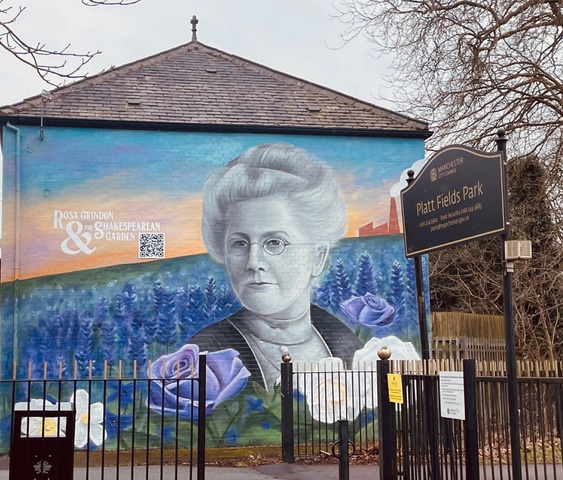
We strolled past the boating lake, no boats in February, but I counted many water birds: Mute Swans, Tufted Ducks, moorhens, coots, gulls. I had no memory of the big pond or its boats! It was right after this that I caught sight of a mural that filled the side of a building at the Fallowfield Brow end of the park. A portrait of a woman painted in bright shades of purple, green and white. It was a bit of a way from the pond and I announced to everyone that I’d go ahead and find out who this woman was. I was thrilled to discover she was a Manchester Rosa (my daughter’s name). The group soon followed me and we began to learn about Rosa Grindon. 

Rosa Elverson Grindon (1848-1923) came from simple beginnings, born in a small village in Derbyshire. She became a Shakespearean scholar who challenged many of the primarily male-dominated interpretations of women in the Bard’s plays. She was the first woman to be invited to lecture at the Stratford Festival and also ran the Manchester Literary Ladies Society, holding meetings in her back garden. She bequeathed money for the Shakespeare window in Manchester’s Central Library. Rosa was a philanthropist and a suffragist, with the goal of votes for women very much in her heart. Like her husband Leo, a botanist, she loved plants and in 1922, the 300th anniversary of Shakespeare’s death, she developed the Shakespearean Garden in the park. It was planted with the 175 plants named in Shakespeare’s plays and poetry. The garden fell into serious neglect over many years of limited budgets for Manchester’s parks. Restoration began in 2021 by an enthusiastic group of gardeners who still tend the garden weekly. There’s an open invitation for interested people to join them.  https://www.facebook.com/ShakespeareanGarden And for more on Platt Fields Park: https://friendsofplattfields.org.uk

The mural was painted in 2024 by Ethan Lemon who has created a visually stunning tribute to Rosa in its bold purple, white and green – colours of the suffrage movement. Ethan Lemon is an established studio and mural artist with an impressive and international list of clients. His murals are in many spots around Manchester. https://www.ethanlemonart.com

Here are a couple of examples of Shakespeare’s words on flowers:

I know a bank where the wild thyme blows,
Where oxlips and the nodding violet grows,
Quite over-canopied with luscious woodbine,
With sweet musk-roses and with eglantine:
There sleeps Titania sometime of the night,
Lull’d in these flowers with dances and delight.
A Midsummer Night’s Dream (2.1.255-60)

Here’s flowers for you;
Hot lavender, mints, savoury, marjoram;
The marigold, that goes to bed wi’ the sun
And with him rises weeping: these are flowers
Of middle summer, and I think they are given
To men of middle age.
The Winter’s Tale (4.4.122-7)

[Final note: in an ironic twist, as I researched Shakespearean Gardens I discovered there has been one in Vancouver BC (where I lived for 40 years) since 1916! So much for my literary awareness. I also found a link to the Canadian Women’s Press Club (1909)  Who’s who at the 3d International Congress of Women, Rosa Grindon listed as having attended. Did she also travel west I wonder?]

Mayfield Park, Manchester and the colour purple.

Have you ever heard of “mauveine measles”? Likely not. I certainly hadn’t until I came across it in accounts of the rapid uptake in the use of newly synthesised purple dye in 1850s and 60s. It is not, in fact, an illness. 

You will be familiar with the notion that purple has historically been the colour exclusively worn by royalty or clerics. The reason for this was because it was so expensive to make purple dye from the mucus of a sea snail found in the Mediterranean. It’s reported that this “Tyrian purple” was first made in Tyre (in what is now Lebanon) and that in 1stcentury CE a pound of the dye cost as much as half a Roman soldier’s annual salary. This all changed when, in 1856 a young chemistry student named William Perkin discovered, quite accidentally, a way to synthesise a purple dye. He’d actually been trying to make quinine to treat malaria when he noticed a purple solution emerge from his mixings. He tested the effect of this unexpected colour on a piece of fabric and when it came out purple he quickly patented this first synthetically produced purple which he called mauveine. A craze for purple clothing took off and soon the label “mauveine measles” was being used to describe how the fashion statement was spreading through Britain.

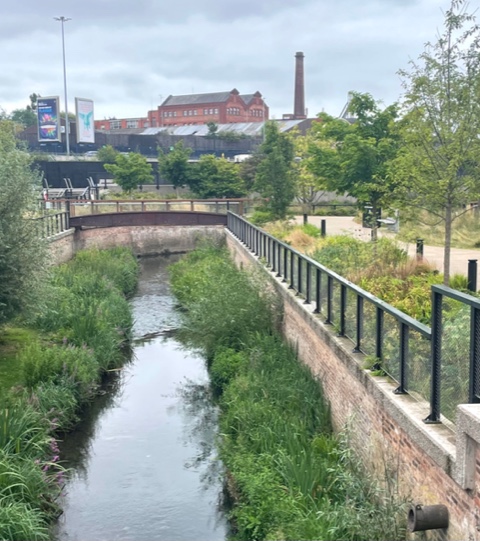
I’ve learned all this after a Ramblers http://ramblers.org.uk walk yesterday took me to Manchester’s newest park (first in a hundred years), Mayfield Park. A site manager gave us a brief history of the site and told of its industrial past, in particular it having been where a man called Thomas Hoyle set up a dye works in 1856. We were told that it was Thomas who had first worked out how to make a purple dye from a plant, rubia tinctorum or European Madder. The park has been planted with many different purple plants to honour Thomas’s legacy as an innovator in making purple fabric available to ordinary folks not just the elite. Despite extensive searches I’ve not been able to find much at all about Thomas’s discovery and have to come down in favour of Perkin as the man who brought the colour purple to the masses.

Thomas Hoyle was, however a progressive employer at his dye-works and notably built a bathhouse for his workers. In 2019 when the site was being excavated for development the remains of the bathhouse were found. The tiles used in the pools were in remarkable condition and many have been saved and will be used in further building on the Mayfield Park site.

I haven’t written any poems about dye works but here’s one I wrote for my first manuscript (for my MFA, 24 years ago!!) about my family history through 19th and 20th centuries and Industrial Revolution stories from that time.

Queen of Red Clay

Some irreverent wag, looking at her

standing…broad wooden sceptre in

her hand and her yellow turban on her head

might call her the Sultana of Edom or 

the Queen of red clay…

Elihu Burrit 1868

She stands statuesque

her turbanned head, her thin garments

spattered with clay she works into bricks,

slaps into moulds, her hands

lift and turn these inedible loaves.

Pale-skinned girls

blood drained by the weight of wet clay

they carry on their heads

might be her pages.

if only their court was gold-painted,

scented by spiced meat searing over open fires,

lady and attendants dressed in silk.

Instead they smell the blaze of kilns

push each common day toward week’s end

and a few pennies for the gin palace

 Beyond the factory wall

men are building monuments to labour.

No ceremony, no kings or queens cut ribbons.

Just brick on brick, slate roofs and chimneys

stacked against a raddled sky..

https://mayfieldpark.com/

https://www.soci.org/about-us/history/notable-scientists-and-inventors/william-perkin

#mayfield stories

https://www.theguardian.com/science/2021/jan/10/victorian-mayfield-bathhouse-uncovered-archaeologist-beneath-manchester-car-park

Walking into writing.

Another in my very occasional musings (note to self: get here more often!)

One step then another. Ignore the steady rain on this typical Manchester morning and lift eyes to the skeletal tops of trees. Listen. A robin, a blue-tit and the increasingly familiar cry of parakeets, now regarded as native birds in the UK. Beside the trail, neon green shoots push through the undergrowth; crocus and daffodils reach up, building confidence. I’m in the present moment as my yoga teacher instructs, attending to What Is and not to What If?

I’ve learned a lot about walking in the last few years. Practicalities like the importance of appropriate clothing. Being wet on the outside is of no concern to me today in my efficient waterproofs. A stick gives me more stability in mud or when climbing a slope. And I’m valuing the friendships I’m making when I go out on guided walks along canals, rivers, parks and out to the edge of the moors with my group, the Manchester and Salford Ramblers. People who love to be out and walking are friendly and open and I’ve had many great conversations. My mostly weekend walks are now between six and nine miles. Walks close to home are more relaxed affairs than they ever were when all I was thinking of was the dog’s need for exercise, my need to get back home for a cuppa and my own “programme” was conducted at the soulless gym. The pandemic cured me of my unhappy relationship with treadmills and weight machines. I now spend time in “my park” (Wythenshawe) and along “my river” (the Mersey) absorbing the rewards of fresh air, the entertainment of squirrels skittering in and around the trees and the sight of grebes, herons or cormorants. The river path connects me back to the other river close to my heart, the Mighty Fraser in B.C. where I have walked for many years and where many poems began to take shape. I get that bonus here too. As I walk, breathe and clear my mind words start to come through and I speak to nature as my audience. Sometimes I take out my phone, set the Voice Memo going so I can recall my thoughts when I get back to my desk.

These two poems evolved from my walking words.

Minding the Fraser Foreshore Trail

Stop. Before this tree,
lift my gaze into its lattice
of branches. They stretch, flex,
reach fingers to their neighbours
and somewhere inside this tangle of green,
scatter of leaves and needles, a bird sings.

I have promised myself, I will
stop, listen to the invisible, the hidden
bird that pipes an alert
mind birdsong,
mind rugged bark
mind branches, needles and leaves
mind this forest trail.

Some days

Along the lower trail that leads to the pond,
plants push through a chaos of growth 
fed by the moist and richly-rotted soil along the creek.
This is where Tara forages for chamomile, she shows me
how it persists all winter in ragged patches beneath tough grasses,
their coarse blades bent to the rain.

Where the path rises and bends, cottonwoods 
spread branches to make a ceiling, in summer
their leaves shut out the sky.
Now, their broad trunks are spaced 
between alders, make a silent room, a space outside
judgment where I can listen 
to the resounding toll of endings.

Inside this monochromed box, 
shut-down, so little light 
seeping through the slats this January morning, 
I will allow no imaginings of a new day’s new blooms,
light caught within them and held, an hour, 
a week, a season. This morning,
there will be no stirrings
of change to ring the pure bell
 that signals all beginnings.

#walking #nature #poetry #hiking #writing

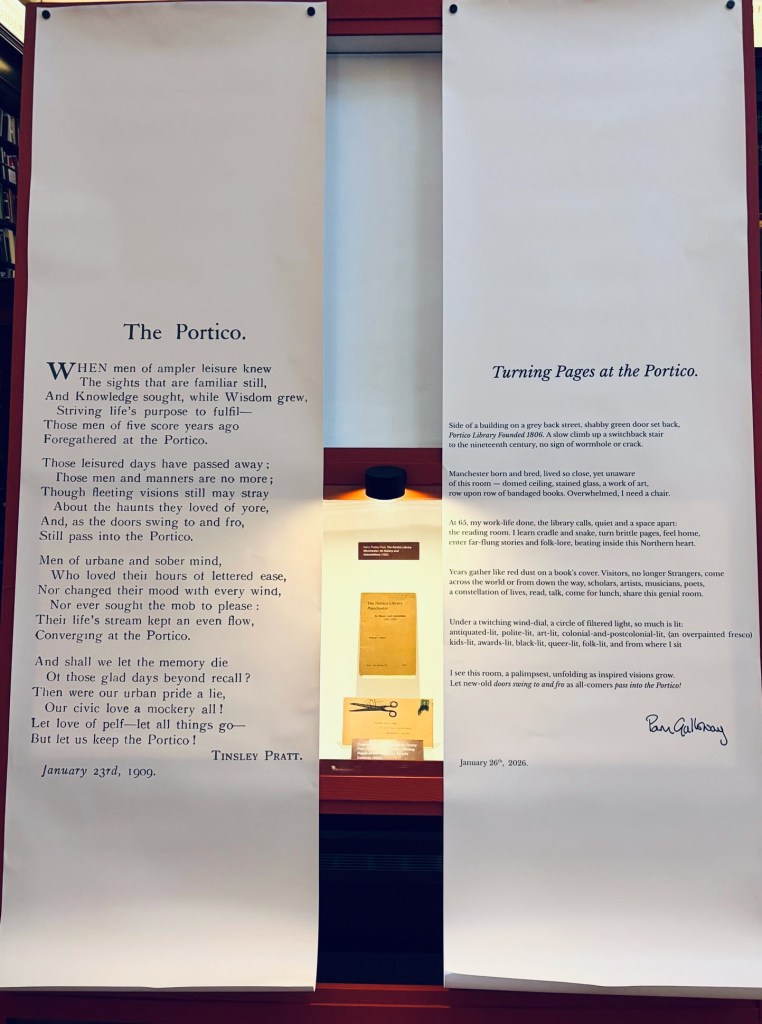
“My Library” – The Portico

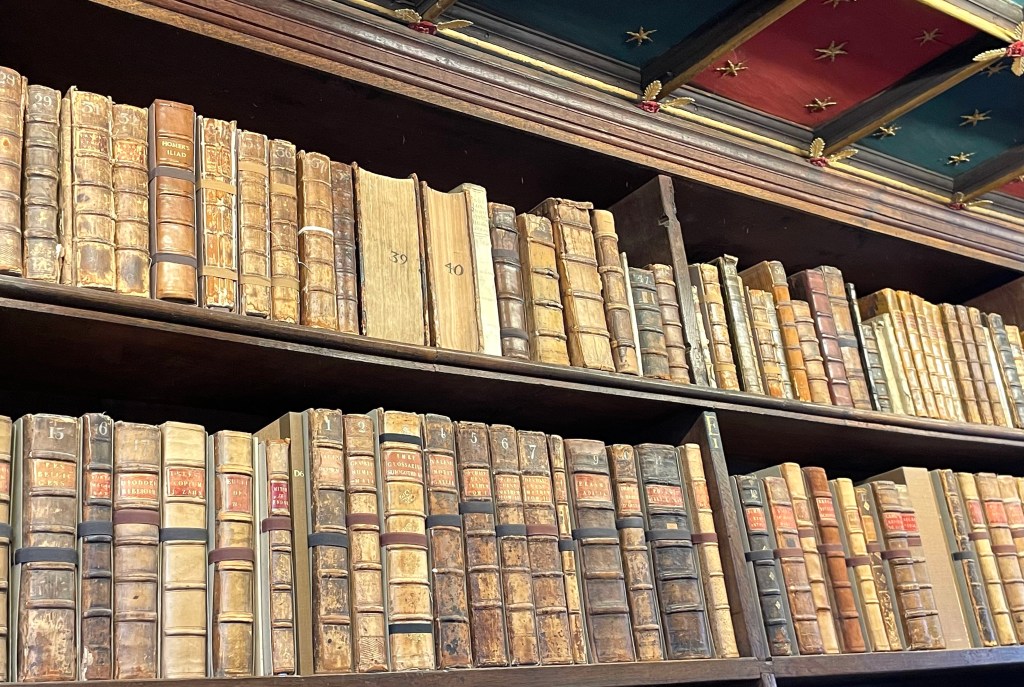
Opened in 1806 the Portico Library https://www.theportico.org.uk/ was funded and supported by 400 initial subscribers all of them well to do men. Women didn’t get a look-in until 1870 with the influence of the Married Women’s Property Act. The first committee envisioned a place which would hold a collection of books, journals and newspapers for the edification of its members and also provide them with a relaxing lunch venue. The Portico, as well as being a fine library has always had an excellent cafe. 

Early members and those who sat on the library’s committee numbered amongst them some world famous names. There was Peter Mark Roget of thesaurus fame, and other members included John Dalton and numerous renowned authors, scientists, future Prime Ministers and  wealthy industrialists. Like many old established institutions in Britain, the Portico is engaged in an examination of its connections to empire building, colonisation and the slave trade. No question that these were sources of money that funded the library and its book collection reflects this history. However, its members also included some radical abolitionists and anti-poverty campaigners.

When I landed in Manchester again four years ago (after 39 years away), I needed a quiet place to write. I did a tour of some of the libraries in the centre of Manchester seeking that perfect spot where I’d be able to sit through a day and quietly get words on to paper. The Portico’s reading room proved to be perfect for my needs. I became a member of the library and in the past year have also been volunteering one day a week which is bringing me into closer contact with the books. 

The Portico Library is a membership library, but it is open to the public who can enjoy its atmosphere and its cafe. The library gained charitable status in 2017 and now has the goal of re-occupying the entire building, taking back the ground floor which has been rented out since the 1920s when the library was short of funds. 

Members of the Portico have access to its collection of books numbering more than 25,000, mostly 19th century, but with some books much older.  

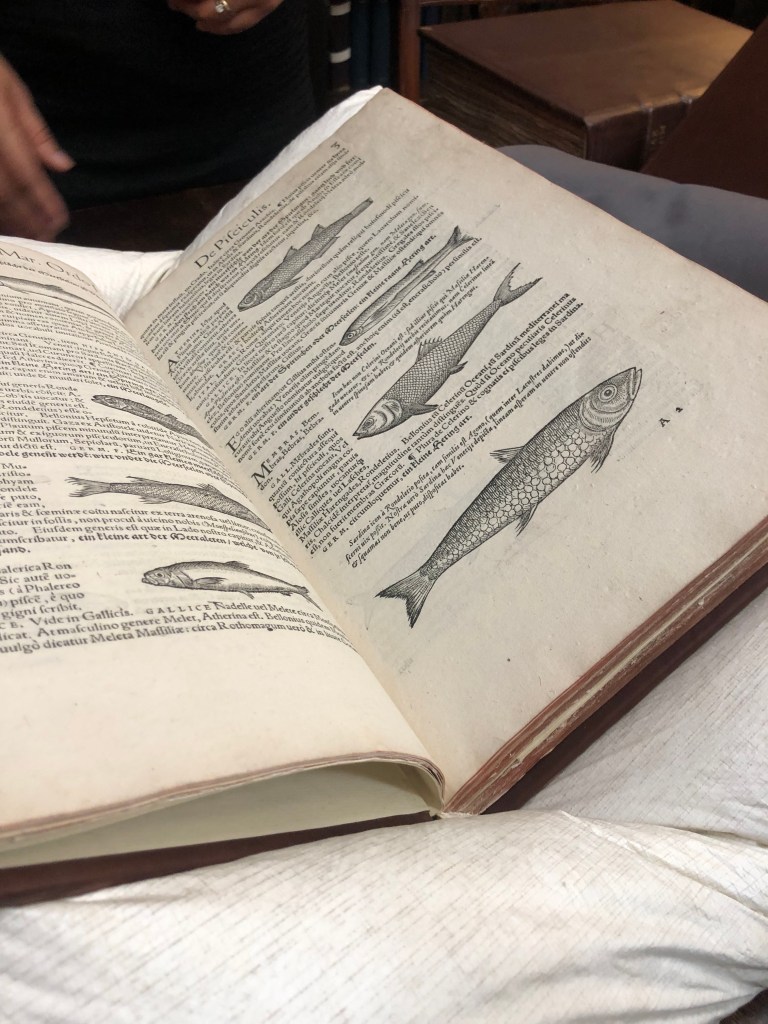
Here is the oldest book in the collection, Historiae Animalium by Conrad Gesner, It is written in Latin and includes many stunning illustrations of animal species. It was published in 1551. There are two volumes which were discovered lying in an extreme state of disrepair, water damaged, in the attic of the building in the late twentieth century. The books were restored and rebound in 1999.

#porticolibrary, #oldbooks, #16thcenturybooks, #19thcenturybooks

Stop what you’re doing – the birds are singing!

Photo by Bob Brewer on Unsplash

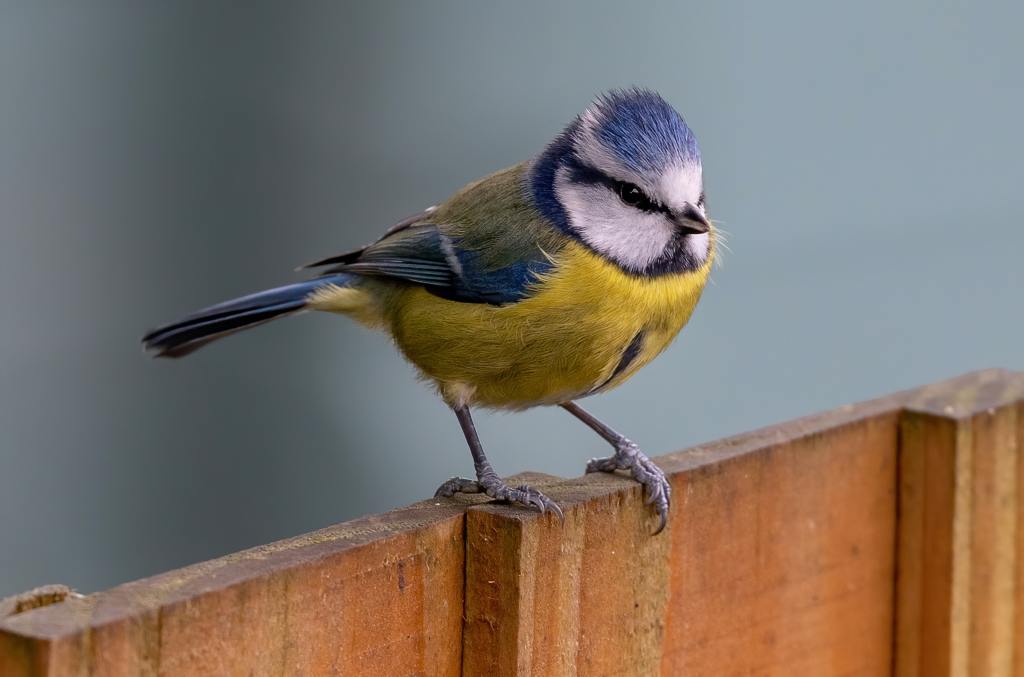
There are no adequate words to describe birdsong. Humans have tried to represent the notes and tunes with words like “trill”, “chirrup”, “twitter”, “tweet” (and these latter two stolen back to label the chatter from our phones). People have even named birds after the sound they make as in cuckoo, chiffchaff, macaw, kittiwake. As I listen to the birds outside my window flying between the branches of the rowan, the buckthorn and all the flowering shrubs I cannot fix on any way to accurately convey the melodious sounds that cheer and inspire me.I consult the experts. Bird books provide all kinds of interesting facts. I learn there are calls and songs. Calls are short, simple phrasings while songs contain more notes and are longer. I recognise these differences. Calls do sound more purposeful, a bit like the human “hey, watch out!” or “stop, pay attention!” Songs are more decorative, seem to be released from the bird’s throat just for the hell of it. Is it blatant anthropomorphism to suggest the bird may be simply feeling good and wants to put that joy out into the world? I suspect, yes.

I consult the experts. I discover that male birds make most sound in spring and summer because it’s all to do with attracting a mate and keeping away rivals from his territory. Females don’t sing – only call (except English robins). Birds that don’t sing at all (e.g. gulls and parrots) have numerous calls. Most common garden birds are passerines or perching birds and all passerines sing. I have also learned that woodland birds have longer, richer songs to penetrate the dense foliage. Marshland birds sing more simply and repetitively in their more open surroundings.

Birds and birdsong have been subjects for poets through the ages. One of my favourites is The Darkling Thrush by Thomas Hardy which boldly speaks of hope coming through difficult times.

And I’ve had a go too, to pay homage to the songs of birds that have graced my journey through gardens, woods and forests.

The Darkling Thrush – Thomas Hardy

I leant upon a coppice gate
When Frost was spectre-grey,
And Winter’s dregs made desolate
The weakening eye of day.
The tangled bine-stems scored the sky
Like strings of broken lyres,
And all mankind that haunted nigh
 Had sought their household fires.

The land’s sharp features seemed to be
The Century’s corpse outleant,
His crypt the cloudy canopy
The wind his death-lament.
The ancient pulse of germ and birth
Was shrunken hard and dry,
And every spirit upon earth
Seemed fervourless as I.

At once a voice arose among
The bleak twigs overheard
In a full-hearted evensong
Of joy illimited;
An aged thrush, frail, gaunt, and small
In blast-beruffled plume,
Had chosen thus to fling his soul
Upon the growing gloom.

So little cause for carolings
Of such ecstatic sound
Was written on terrestrial things
Afar or nigh around,
That I could think there trembled through
His happy good-night air
Some blessed Hope, whereof he knew
And I was unaware.

I was inspired to write the following poem for a friend’s husband who chose to create beautiful objects to leave in the world as he faced his end of life.

Birdsong

(For the memory of Gregory)

A robin is singing from the top of the cedar.
You are listening to the bird.
Waiting for the trills to stop, for the short night
before another chorus at dawn.

This spring you’ve learned there will be no more
so you work all the days and nights you have left 
make chairs, tables, shelves to fill the space 
you’ll leave behind. Carving, cutting grooves and curves, 
following the lines with strokes, your hands 
smoothing surfaces. They absorb your warmth. 
You take a white cotton cloth, rub the stain into a circle.

Birdsong augured by the scrape and tap of tools.


Poetry and Music – Cardinal

Rhythm, rhyme, the expression and stirring of emotion, memorable phrasing, all elements of poetry and of music. All through the ages, poets have been inspired by composers and composers by poets. 

I got my chance, last year, to realise the magic that occurs when music and poetry combine. Isaac Zee, a highly talented young composer isaaczee.com came into my life when he rented  a room in my house (how to pay the mortgage). He was invited to compose a piece for an innovative music project conceived by his colleagues Tristan Zaba and Mackenzie Warrener. Through their new company, Slow Rise Music they had landed funding from the Canadian Music Centre to produce three new vocal multi-instrumental compositions. Isaac was to write one of these and he needed lyrics. Would I be interested? How to say no! And yet I’d never before worked with a composer. 

The theme, initially inspired by the previous year of pandemic, was “Survival”. And yet we were invited to think more broadly on this theme. What did survival mean to me? I’ve always written landscape poems — survival of the environment; I’ve written about my mother, who I care for, surviving life itself (she’s 91).

I began to write a new piece based on notes I had made on the topic of domestic abuse. The “Me Too” movement had raised awareness of the endemic nature of toxic masculinity and its impact on women. In England, many of us were raw with anger and sadness after the murder, by a serving police officer, of Sarah Everard a young woman simply walking home. For myself, I know too many women who have borne the scars of abusive relationships. And I know women reject the notion of victimhood. Women survive.

Isaac and I began the work. We met over Zoom and had wide-ranging discussions about how a poem works: structure and form and elements of musical composition. How did I write a poem and how did he compose a piece of music?

Our collaboration brought the composition “Cardinal” into life. It was one of three pieces for voice, keyboards and guitar performed in November 2021 in a concert, “Hanging By a Thread”, for a small Toronto audience. Tristan, guitar and bass voice and MacKenzie, keyboard and soprano voice had begun to realise their goal of breaking down barriers between genres in classical music. Conventionally this concert would have been a quartet, two musicians, two singers. Pop music or perhaps folk, more associated with the set-up they chose. 

The video has a slow, silent start, be patient. Cardinal is the second song.

My thanks to Isaac for lifting up my words inside his music and to Tristan and MacKenzie for a profoundly moving performance.

What shines?

Photo credit: http://photos.google.com/search/stars/photo/AF1QipOj63PiC-CRpOKVT_XCUWh4cxFSwFNrsh8vPUSH

I’ve had window blinds fitted in my flat today. I moved in six months ago but for some reason known only to the gods of procrastination its taken me this long to get round to it. In the bedroom, it’s a blackout blind as my building has outdoor security lights. I managed to sleep without disturbance for the first couple of months but, after a horrible bout of insomnia later in the year, I took to wearing an eye-mask. All animals naturally are awake and active in daylight hours and sleep when darkness falls. We all need sleep, powerful in its role in regenerating all the systems of the body. Darkness falls like a cosy thick blanket over me when I switch off my bedside lamp. I welcome the dark, feel safe and protected and sleep well.

Yet darkness can also be scary. Outdoors, when darkness falls we are naturally on guard for dangers that may lurk unseen. Walking home late at night many women in particular feel the push of potential threat. It’s something feminists have for decades pushed back at. “Take Back the Night” marches were frequent in the 70s. I went on lots but, in truth, despite feeling outrage at the seeming need for women to curtail their actions to avoid threats at night, I never totally shifted my uneasiness enough to feel confident and safe.

Flip this whole narrative into a pitch black night out on one of the Gulf Islands, off the west coast of British Columbia or up north where wilderness is easier to get inside. Now, darkness comes bearing gifts, pierced by millions, and more, brilliant holes – stars, planets, galaxies, constellations. Under a cloudless night sky I feel not only safe but filled with great comfort. I’ve lain out many summers on the warm earth to gaze up at the Persied meteor showers that occur every August. The black sky, deep as the deepest nothingness suddenly comes alive. As stars go off in rapid-fire shots of brilliance, my eyes become accustomed to the dark and begin to pick up more subtle movement in the glimmer of other stars and planets. I wrote the poem “Purden Lake” years ago after one such night of wonder.

Purden Lake

“…music that will melt the stars.”

(Flaubert)

If I had been dropped in here, into this small circular clearing, if it had been gouged out with no roads leading in, you’d never find me. I’d be alone at the base of a soundless dry well. I could walk, turn circles around the edges of gravelled earth but there would be no way out.

The only opening: up. Now, it’s gaping black and deep, beginning to break out its intricate pattern of stars. If they were music, the stars would begin inaudibly, build slowly, gather sound as more appeared. Is the music, are the stars constant, and only my attention lacking to perceive them? It takes a while but then I see the long trace, the shining blur that is the Milky Way: crescendo.

I know that some of these stars are dead. What I see is only light, millions of years away from the place where it started, light that long ago disappeared. Perhaps I can pull these from the sky. I could make some space in all that confusion of brightness. Find a way out. But what would I do with so much light? Could I hold it in my arms? Would it liquefy, run through my fingers and into the earth or remain hard-edged silver, prick my skin? What can light weigh?

From Parallel Lines by Pam Galloway: Ekstasis Editions 2006.

Review of Peter Street’s “Goalkeeper”

I met Peter Street at a poetry reading when he was reading from his new book of poetry.

(Remember when we used to do that? Go out of an evening to a venue, maybe in town, where people gathered, even sat down next to each other and talked face to face?)

I was drawn immediately to Peter’s voice in his poems which personified plants and tackled political, social and environmental issues in bold and often amusing ways. This, from a review at the time:

Everything natural is beautiful and itself and a metaphor at the same time; everything is dangerous and true “remembering those poor beetles  / who tested the waters and teased  the millions of elms into suicide  / even then we were still ignored”.  This is a book we all need to read. Caron Freeborn 

When Peter told me about his memoir, coming out later this year and asked me to review it, I was happy to do so.

But I’d like you to check out Peter’s poetry too.

Saying No To The Icebergs   Sand Sedge Carex arenaria

like all families we have fought

put it behind us
an army is washing
towards us

waves of them
from land of ice and water
we have to be ready

or be washed away

come and stand with us
here next to my triangular stems
shields against their salt-burn

we have to slow those waves down

take the battle to them here
on these dunes
Sand Sedges are natural warriors

we take root colonise
safe in numbers
know what we have to do
are you with us

_______________________________________

Peter Street’s Goalkeeper – Games, secrets, epilepsy, love pulled me through its fast-paced story. With its weaving together of all that its sub-title promises the story grabbed my attention and was a quick read. It begins dramatically enough in war-torn Croatia in 1993 when Street has gone as a volunteer during the Croat-Bosnian war. Soon, his memories return to the streets of Wigan and Bolton, his home with “Mum”, Kitty, and “Dad”, Thomas, who is responsible for quite a few of the secrets. There are friends and more than one potential girlfriend who provide, at different stages of Street’s life, empathy, companionship, early stirrings of love and desire and tragic losses. But these are not Streets true friends. He describes the comfort and ease he felt when it was just “me, ball and wall” as he practised his football skills and played marbles in the old outside toilet where he felt safe and happy.

“On rainy days, I would spend most of my time inside that outdoor toilet. It seemed to come alive with purpose whenever I turned up”.

The heart of this story is in Street’s documentation of learning difficulties at school and in a string of soul-destroying jobs, epilepsy surfacing at the age of fifteen, ultimately ending his passionate wish to be a professional goalie. Not that he doesn’t have some success at football and there are gripping play by play accounts. Street also very effectively conveys his experience of being a child who was clearly showing signs of autism spectrum disorder from his very early years. He shows us what this was like in so many of his recollections by depicting objects as having agency, appearing to be more human than the real humans in his life. At first I thought that this way of describing things acting on him was a stylistic choice and perhaps rather over-used until I began to see that this was exactly how Street saw his world. The stairs and the doors are active players in his games of football, cobbles and steps walk him along, pictures in books admired him as much as he admired them. And the young lad, Peter, was more at ease by himself than with most other people. Being around people set off uncomfortable sensations and at times caused him real distress.

“To me, lonely was a kind of freedom for my ears and my whole body, giving the real me a rest”.

Goalkeeper includes charming pictures illustrating life in the North in the 50s and 60s that really bring Street’s account alive. It is a satisfying read that is often heart-warming and at times heart-wrenching as Street battled (even when not fully aware of the nature of his foes) all that life threw in his path. The human spirit is strong. Peter Street has become, if not a famous goalie, a talented writer and poet.


View all my reviews

Poetry saves trees

Forests are big in B.C. So is logging.
B.C’s history of clear-cutting vast swathes of trees to feed the ever-hungry forestry industry is legend. In this year of the 21st century the battle to protect precious trees goes on. As I write, a petition is circulating to demand the BC government put a moratorium on logging ancient trees.

I started out wanting to tell the story of activism that worked to save trees including an act of poetry-driven environmentalism. Today’s news comes to remind me that we must remain vigilant. The lungs of our planet need us to protect them.

Standing with the trees

Soon after I moved to BC in 1980, I joined environmental campaigns to convince governments at every level to end clear-cutting of ancient first-growth forests and to introduce more sustainable logging practices. One such massive effort to protect trees played out in Clayoquot Sound through the eighties and nineties. The “War in the Woods” began in 1980 when local First Nations began peaceful protests which grew in size and support. In 1993, after the provincial government published a land use plan which allowed logging in two thirds of the forest in Clayoquot Sound, protests became huge and emotions and determination ran high. Hundreds of protesters were arrested and put on trial. These protests in support of the Nuu-chah-nulth people’s rights to protect their unceded land and waters drew world-wide media attention. In 1995 the BC government accepted the recommendations of the scientific panel on Clayoquot Sound. In 2000, Clayoquot Sound was declared a Biosphere Reserve by UNESCO. Meares Island Tribal Park was established in 2014. Now, in acknowledgement of indigenous Canadians’ sovereignty the re-named Tla-o-qui-aht Tribal Parks, has management of the land.

Poems in the trees

McLellan Forest, Langley, B.C. A small forest compared to the vast growth in Clayoquot Sound , the fight to save it no less important and I proudly took part in an action with poetry at its heart.In 2012 McLellan Forest was threatened by a cynical claim for land development. The local Township had the land up for sale to make way for the building of private estates.A protest group, Watchers of Langley Forest (WOLF) was hard at work trying to raise the $3 million to buy and protect the forest which held a 240 year old cottonwood tree at its centre. A valiant but not easy task.

In stepped the poets and artists!
Led by renowned BC poet, Susan McCaslin, artists, dancers, poets, photographers and student film-makers arrived at the forest to defend and protect it. Susan knew they needed to garner broader attention and that was when she remembered the ancient Chinese poet Han Shan of Cold Mountain. He was a recluse who wrote his poems on rocks and also hung poems from trees. Susan followed his example. She used social media to call for tree-inspired poems and received hundreds. She strung the poems together and draped them from the trees that now people from across Canada and the world wanted to save. My poem, Guardian Pine, hung from a cedar. Artist, Susan Falk embarked on a project to paint the forest and she included words from poems on 13 paintings. I was thrilled when she chose words from my poem.

I have listened to the chatter
of souls in the snap-snap of seeds
breaking from its cones in spring.

Artist-driven activism works. The BC Ministry of Environment declared McLellan Forest an “ecological reserve.” But provided no financial support. Over to the Mayor and Council who, in the fall of 2013, preserved part of McLellan Forest as a municipal park, now known as McLellan Forest Natural Park. A private donation secured the remainder of the land, now also a conservation area.

Maybe its time to send tree poems to the BC government. I believe I will do that.

Guardian pine

Nights, I’ve shut out the dark,
the real or imagined voices
percolating from beyond the window, 
pulled a shawl around my need for warmth,
blanket to my chin, grateful for latches,
locks and blinds.

This night, the blinds taken down,
the pine looms. Feathered-edged,
its silhouette presses toward the room,
black as the pupil of the watchful spirit
legend tells crouches in its branches
arms stretched over the living
and the dead.

I have listened to the chatter
of souls in the snap-snap of seeds
breaking from its cones in spring.
Now, winter’s deep and silent well 
has me submerged and I turn,
entreat that dark-eyed spirit
watch over me.

PG. From Passing Stranger (publ 2014 Inanna Publications, Toronto)

Looking for the Stanza Stones

img_0254

An overcast but dry day waited for us to get going on our hike up Ilkley Moor. The moor, for those not familiar with the geography of Yorkshire sprawls above Ilkley a small town north of the West Yorkshire city of Bradford.

https://goo.gl/maps/h96mEC7qwYh2a9kE6

Moors are wild and often bleak places, uplands of low-growing vegetation, heathers and bracken with high rainfall and peaty soil which is a rich store of carbon. The website of Friends of Ilkley Moor tells us: “It is estimated that there is twice as much carbon stored in Britain’s soils as there is in its woodlands.” https://www.ilkleymoor.org/discovering-ilkley-moor/conservation/

On this typically British summer day, cloudy and just the right side of warm (perfect for a hike) my companion and I had a mission, a destination in mind. We were heading to the Beck Stone, one of seven large rocks located across the Pennine Watershed, each with a poem by Britain’s Poet Laureate Simon Armitage carved into its surface. This project was conceived by the Ilkley Literature Festival in 2010 who commissioned Armitage to write a series of poems for the South Pennine Watershed. Armitage wrote poems which, in his words, celebrated “the element which gave shape and form to this region, namely water.” Each poem describes water in a different form: Beck, Puddle, Mist, Rain, Dew and Snow. The seventh Stanza Stone was placed in a secret location and remains unfound to my best knowledge. Pip Hall, letter-carver, carved the poems with her assistant Wayne Hart and the Stanza Stones Trail, which covers 47 miles between Marsden, Armitage’s place of birth and Ilkley was devised by landscape architect Tom Lonsdale.

We set off on our walk from Darwin Gardens Millennium Green close to Ilkley town centre. The Millennium Green was built to celebrate the turn of the 21st century and incorporates its own carved stones to honour Ilkley’s famous one-time resident. We had fun tackling the stone flag maze at the Green’s heart.

img_0244

My companion cheerily told me it wasn’t far at all to the Beck Stone, only a mile. When we were, later, scrambling up some rocky stretches at times unstable underfoot, I remarked in response “Maybe only a mile but you didn’t tell me it was a mile straight up!”

As well as the most obvious heathers and ferns, we also came across cottongrass, crowberry and bilberry and, as we climbed, a stunning vista opened when we turned to look down on the town we’d left behind.

img_0252

In his introduction to the Stanza Stones trail guide Armitage refers to the tradition of carved stones across the moors. From pre-historic standing stones, boundary stones placed throughout time right up to contemporary graffiti, people have been placing and inscribing stone in the wild environment for millennia.

When we reached the Beck Stone it did not disappoint. Backstone Beck, trickles then rushes down the hillside and getting close up requires a small jump across the stream and a bit of a clamber onto an adjacent rock. I did it! I perched on the rock and read the poem out loud. Here it is:

The Beck Stone

It is all one chase.
Trace it back the source
might be nothing more than a teardrop
squeezed from a Curlew’s eye,
then follow it down to the full-throated roar
at its mouth – a dipper strolls the river
dressed for dinner in a white bib.
The unbroken thread of the beck
with its nose for the sea
all flux and flex, soft-soaping a pebble
for thousands of years, or here
after hard rain, sawing the hillside in half
with its chain. Or here, where water unbinds
and hangs at the waterfall’s face, and
just for that one, stretched white moment
becomes lace.

©Simon Armitage 2010

This poem evokes a perfect image of the beck, its persistence through millennia carving the landscape as the words are carved into the stone.

Our next goal was to find the Poet’s Seat promised to us beyond the Beck Stone. There, walkers and aspiring poets are invited to write and post a poem in the clever postbox which then spits out another poem left by a previous visitor to the Seat.

We walked on and gradually climbed and reached the Poet’s Seat where a family, mum, dad, uncle and kids were busy writing and talking about poetry. When asked if she had written a poem to post, one of the girls told us perkily, “Parent’s doing it”! Clear division of labour in that household.

We had brought poems to post but realising the intention to encourage on-the-spot composition, my companion took up the challenge and wrote a short ditty about coming across Simon Armitage on the moor. 

img_2881

What more to desire — fresh Yorkshire air, glorious vistas of moor and communities below and poetry!  I’m looking forwad to finding another of the Stanza Stones on our next adventure.

Here’s a review of “Stanza Stones” the book by Simon Armitage, with Tom Lonsdale and Pip Hall
(Enitharmon Press, 2013); hbk, £15

https://dura-dundee.org.uk/2015/02/18/stanza-stones/

Procrastination atop the Yorkshire moors

The stark and promise full moor beckons.
I might venture up to Stoodley Pike,
grand obelisk, peace built
into every brick, nothing surrounds it
taller than scorched tussocks, scrubby grass.
I could turn north, strike out for Haworth Moor.
What chance to come upon Emily dreaming there?
Perhaps a half-glimpse of her ethereal skirts turning
in a swirl of mist or her voice on a whisper of air.

If I head down toward the wooded valley,
dark gatherings of trees press close
to stone houses ranged on the hillside.
I can swish through knee-high grass in the field,
a picnic table beside a gnarly apple tree,
good rest stop. But still the need
to consider Blackshaw Head,
to imagine all its seasons beyond this
slow-breathing summer. Rain
lashing in at 45° or snow stacked against stone
like a battlement. Never a soft enfolding.

Also the necessity of bathing.
A huge breakfast cup
to stream water over my head
indulgence of bubbles, slosh of water
over my shoulders, breasts and belly,
water in big splashes, playful
and somehow surprising.

After dressing there are the plants
to water: greenhouse tomatoes, cucumbers
and all around the house, pots and baskets;
pelargoniums, hostas, petunias,
impatiens, and lined against a wall
or in a space between path and grass,
the ones easy to miss.

At last, I approach the blank page,
after I find the right spot, summer house
and bench in the garden too hot.
On the swing-seat I can sway, push into a rhythm
find words to match, fill paper
with this place.