Walking into writing.

Another in my very occasional musings (note to self: get here more often!)

One step then another. Ignore the steady rain on this typical Manchester morning and lift eyes to the skeletal tops of trees. Listen. A robin, a blue-tit and the increasingly familiar cry of parakeets, now regarded as native birds in the UK. Beside the trail, neon green shoots push through the undergrowth; crocus and daffodils reach up, building confidence. I’m in the present moment as my yoga teacher instructs, attending to What Is and not to What If?

I’ve learned a lot about walking in the last few years. Practicalities like the importance of appropriate clothing. Being wet on the outside is of no concern to me today in my efficient waterproofs. A stick gives me more stability in mud or when climbing a slope. And I’m valuing the friendships I’m making when I go out on guided walks along canals, rivers, parks and out to the edge of the moors with my group, the Manchester and Salford Ramblers. People who love to be out and walking are friendly and open and I’ve had many great conversations. My mostly weekend walks are now between six and nine miles. Walks close to home are more relaxed affairs than they ever were when all I was thinking of was the dog’s need for exercise, my need to get back home for a cuppa and my own “programme” was conducted at the soulless gym. The pandemic cured me of my unhappy relationship with treadmills and weight machines. I now spend time in “my park” (Wythenshawe) and along “my river” (the Mersey) absorbing the rewards of fresh air, the entertainment of squirrels skittering in and around the trees and the sight of grebes, herons or cormorants. The river path connects me back to the other river close to my heart, the Mighty Fraser in B.C. where I have walked for many years and where many poems began to take shape. I get that bonus here too. As I walk, breathe and clear my mind words start to come through and I speak to nature as my audience. Sometimes I take out my phone, set the Voice Memo going so I can recall my thoughts when I get back to my desk.

These two poems evolved from my walking words.

Minding the Fraser Foreshore Trail

Stop. Before this tree,
lift my gaze into its lattice
of branches. They stretch, flex,
reach fingers to their neighbours
and somewhere inside this tangle of green,
scatter of leaves and needles, a bird sings.

I have promised myself, I will
stop, listen to the invisible, the hidden
bird that pipes an alert
mind birdsong,
mind rugged bark
mind branches, needles and leaves
mind this forest trail.

Some days

Along the lower trail that leads to the pond,
plants push through a chaos of growth 
fed by the moist and richly-rotted soil along the creek.
This is where Tara forages for chamomile, she shows me
how it persists all winter in ragged patches beneath tough grasses,
their coarse blades bent to the rain.

Where the path rises and bends, cottonwoods 
spread branches to make a ceiling, in summer
their leaves shut out the sky.
Now, their broad trunks are spaced 
between alders, make a silent room, a space outside
judgment where I can listen 
to the resounding toll of endings.

Inside this monochromed box, 
shut-down, so little light 
seeping through the slats this January morning, 
I will allow no imaginings of a new day’s new blooms,
light caught within them and held, an hour, 
a week, a season. This morning,
there will be no stirrings
of change to ring the pure bell
 that signals all beginnings.

#walking #nature #poetry #hiking #writing
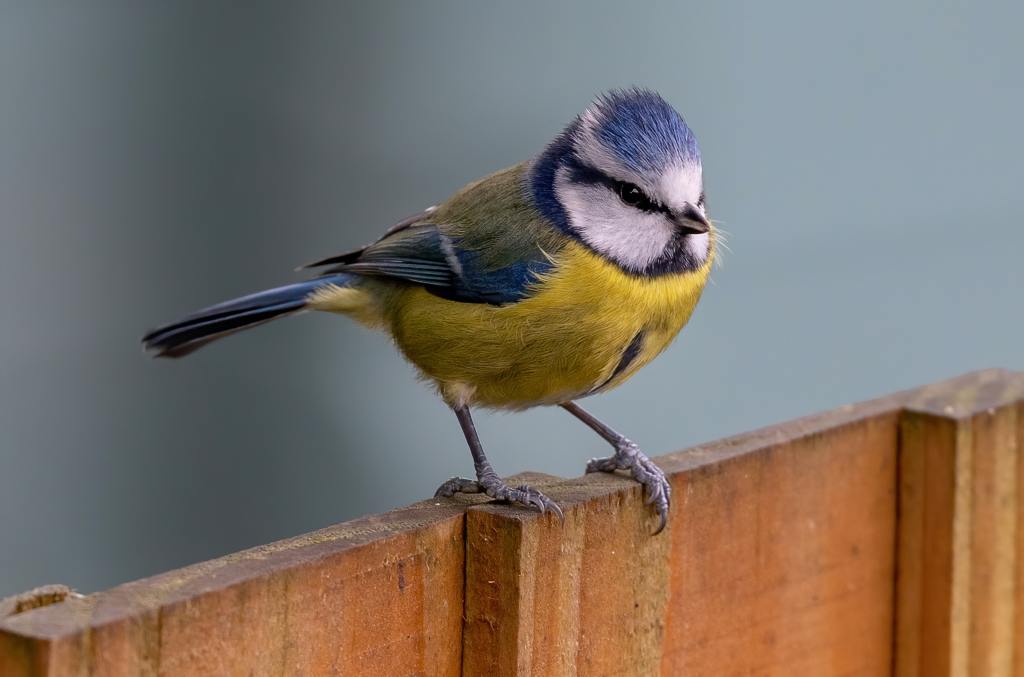
Stop what you’re doing – the birds are singing!

Photo by Bob Brewer on Unsplash

There are no adequate words to describe birdsong. Humans have tried to represent the notes and tunes with words like “trill”, “chirrup”, “twitter”, “tweet” (and these latter two stolen back to label the chatter from our phones). People have even named birds after the sound they make as in cuckoo, chiffchaff, macaw, kittiwake. As I listen to the birds outside my window flying between the branches of the rowan, the buckthorn and all the flowering shrubs I cannot fix on any way to accurately convey the melodious sounds that cheer and inspire me.I consult the experts. Bird books provide all kinds of interesting facts. I learn there are calls and songs. Calls are short, simple phrasings while songs contain more notes and are longer. I recognise these differences. Calls do sound more purposeful, a bit like the human “hey, watch out!” or “stop, pay attention!” Songs are more decorative, seem to be released from the bird’s throat just for the hell of it. Is it blatant anthropomorphism to suggest the bird may be simply feeling good and wants to put that joy out into the world? I suspect, yes.

I consult the experts. I discover that male birds make most sound in spring and summer because it’s all to do with attracting a mate and keeping away rivals from his territory. Females don’t sing – only call (except English robins). Birds that don’t sing at all (e.g. gulls and parrots) have numerous calls. Most common garden birds are passerines or perching birds and all passerines sing. I have also learned that woodland birds have longer, richer songs to penetrate the dense foliage. Marshland birds sing more simply and repetitively in their more open surroundings.

Birds and birdsong have been subjects for poets through the ages. One of my favourites is The Darkling Thrush by Thomas Hardy which boldly speaks of hope coming through difficult times.

And I’ve had a go too, to pay homage to the songs of birds that have graced my journey through gardens, woods and forests.

The Darkling Thrush – Thomas Hardy

I leant upon a coppice gate
When Frost was spectre-grey,
And Winter’s dregs made desolate
The weakening eye of day.
The tangled bine-stems scored the sky
Like strings of broken lyres,
And all mankind that haunted nigh
 Had sought their household fires.

The land’s sharp features seemed to be
The Century’s corpse outleant,
His crypt the cloudy canopy
The wind his death-lament.
The ancient pulse of germ and birth
Was shrunken hard and dry,
And every spirit upon earth
Seemed fervourless as I.

At once a voice arose among
The bleak twigs overheard
In a full-hearted evensong
Of joy illimited;
An aged thrush, frail, gaunt, and small
In blast-beruffled plume,
Had chosen thus to fling his soul
Upon the growing gloom.

So little cause for carolings
Of such ecstatic sound
Was written on terrestrial things
Afar or nigh around,
That I could think there trembled through
His happy good-night air
Some blessed Hope, whereof he knew
And I was unaware.

I was inspired to write the following poem for a friend’s husband who chose to create beautiful objects to leave in the world as he faced his end of life.

Birdsong

(For the memory of Gregory)

A robin is singing from the top of the cedar.
You are listening to the bird.
Waiting for the trills to stop, for the short night
before another chorus at dawn.

This spring you’ve learned there will be no more
so you work all the days and nights you have left 
make chairs, tables, shelves to fill the space 
you’ll leave behind. Carving, cutting grooves and curves, 
following the lines with strokes, your hands 
smoothing surfaces. They absorb your warmth. 
You take a white cotton cloth, rub the stain into a circle.

Birdsong augured by the scrape and tap of tools.